 AUS Stock - Local Delivery

White Widow strain is one of the most iconic and widely grown cannabis strains in the world.
Some strains become popular for a season.
White Widow became part of cannabis history.
Decades after it first hit Dutch grow rooms, this strain is still one of the most recognised names in the world — and for good reason. It grows reliably, hits with beautiful balance, and produces the kind of frost that made growers stop and stare long before resin-heavy strains became the norm.
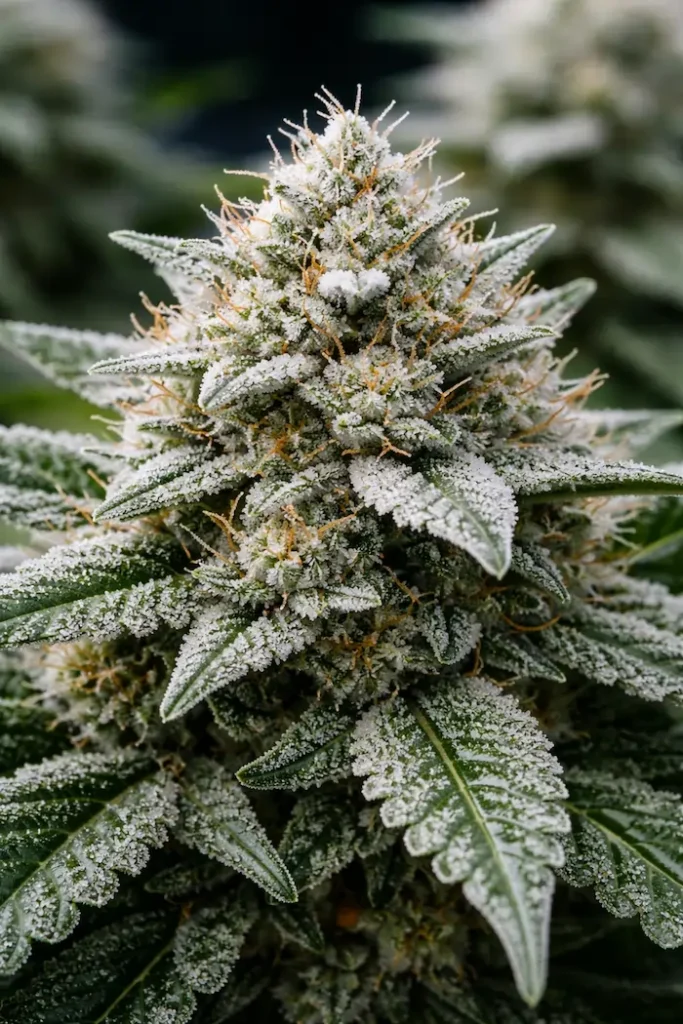
I still remember the first proper White Widow plant I saw in late flower. A mate opened the tent and the buds looked like someone had shaken icing sugar over them. Not a light sparkle — a full frost coat.
That was the moment I understood why this strain never really disappeared.
In this review, I’ll break down White Widow’s genetics, flavour profile, effects, and what growers can realistically expect when running this classic hybrid today.
— Matty
White Widow Strain Quick Facts
| Trait | Details |
|---|---|
| Genetics | Brazilian Sativa Landrace × South Indian Indica |
| Strain Type | Balanced Hybrid |
| THC Level | 18–22% |
| CBD Level | Low |
| Flowering Time | 8–9 weeks |
| Indoor Yield | 450–500 g/m² |
| Outdoor Yield | 550–600 g per plant |
| Difficulty | Beginner to Intermediate |
| Dominant Terpenes | Myrcene, Pinene |
White Widow remains one of the most widely grown cannabis strains in the world thanks to its reliable growth, heavy resin production, and balanced hybrid effects.
Is White Widow Indica or Sativa?
White Widow is a balanced hybrid cannabis strain.
It delivers a mix of gentle cerebral uplift from its sativa side and calm body relaxation from its indica genetics.
This balance is a big part of why White Widow became so popular — it offers a smooth, predictable experience without leaning too far in either direction.
Matty’s take: “It’s one of those strains that just sits right in the middle — easy to enjoy, hard to mess up.”
The Origin of White Widow
White Widow first appeared in the Netherlands during the early 1990s and quickly became one of the most recognisable cannabis strains ever bred.
The genetics are simple but powerful:
- Brazilian Sativa Landrace
- South Indian Indica
This pairing created a balanced hybrid that combined uplifting cerebral effects with relaxing body calm.
But what really made the strain famous was resin production.
When White Widow flowers properly, the buds appear almost white because they’re covered in dense trichomes.
That frost layer is exactly how the strain earned its name.
In the 90s, that kind of resin production was revolutionary. Even today, many modern hybrids struggle to match it.
Matty’s Note: The first time I grew Widow properly, I thought the trichomes were mould at first glance. That’s how thick the frost was by week seven.
Appearance, Aroma & Flavour
White Widow plants grow compact and sturdy with classic hybrid structure.
The buds form dense clusters and quickly become coated in resin during mid-to-late flower.
By harvest time the trichome coverage can make the buds appear pale or almost silver.
The aroma profile sits firmly in classic cannabis territory:
- Earthy base notes
- Pine and herbal spice
- A subtle citrus brightness in some phenotypes
White Widow commonly expresses terpene combinations dominated by myrcene and pinene, which explains the earthy-pine scent and the clear-headed feel many growers describe.
It’s not a candy or dessert strain like many modern hybrids.
Instead, White Widow delivers a clean, old-school cannabis flavour profile.
Matty’s Take: “White Widow smells like proper classic weed — earthy, piney, slightly spicy. If you grew up before dessert strains took over, this one feels familiar in the best way.”
Potency & Effects
White Widow typically tests between 18–22% THC, placing it comfortably in the moderate-to-strong potency range, though some modern cuts occasionally test a touch higher under dialled-in conditions.
What makes the strain special isn’t just THC — it’s balance.
The high usually begins with a gentle cerebral lift. Mood improves, focus sharpens slightly, and energy levels rise.
After that initial head effect, body relaxation gradually follows.
Not couch-locking.
Not jittery stimulation.
Just a smooth hybrid experience.
Matty’s Take: “White Widow is one of the most balanced highs out there. You feel it in the head first, then the body slowly settles in. Perfect for a relaxed afternoon session.”
Where White Widow Fits Among Cannabis Strains
White Widow sits in a unique spot among cannabis strains. It isn’t an ultra-heavy indica and it isn’t an energetic pure sativa.
Instead, it belongs to that sweet spot growers often call balanced hybrids — strains that deliver both mental lift and physical relaxation without going too far in either direction.
That’s a big part of why White Widow became such a global staple. It’s approachable for a wide range of growers and users, and the effects are predictable in a way many newer hype strains simply aren’t.
If you enjoy strains like Gorilla Glue, Northern Lights, or classic all-rounders like Blue Dream, there’s a good chance you’ll appreciate White Widow for the same reason: dependable genetics, balanced effects, and no drama in the grow room.
Matty’s take: “White Widow isn’t trying to win the loudest terp contest or break THC records. It just does everything well — and that’s exactly why it’s lasted.”
Growing White Widow: What to Expect
White Widow has remained popular among growers for one simple reason: reliability.
The plant is resilient, adaptable, and performs well in a wide range of environments.
White Widow performs especially well in Australian outdoor conditions thanks to its resilience, strong structure, and ability to handle a bit of environmental variation without throwing a tantrum.
Climate & Environment
- Indoor temperature: 20–26°C
- Outdoor climate: Mediterranean-style environments
The strain tolerates environmental fluctuations better than many modern hybrids, though stable conditions always produce the best results.
Flowering Time
Most phenotypes finish flowering in about 8–9 weeks indoors.
Outdoor growers in Australia typically harvest around late March to early April, though warmer northern regions can sometimes finish a little earlier.
Yield Potential
- Indoor: ~450–500 g/m²
- Outdoor: ~550–600 g per plant
While it’s not the highest-yielding strain available today, White Widow consistently produces dense, resin-rich buds.
Training & Grow Behaviour
White Widow tends to grow moderately bushy rather than extremely tall, making it well suited for small indoor tents.
Growers commonly use:
- Low-Stress Training (LST)
- Light pruning
- Basic canopy management
One thing to watch during mid flower is magnesium demand. During the heavy resin production phase around weeks 4–6, White Widow can occasionally show magnesium hunger if pH drifts too far outside optimal range.
Keeping soil pH roughly between 6.2 and 6.6 helps maintain magnesium and phosphorus availability for strong trichome production.
If your White Widow plants start showing yellowing or spotting during this phase, use our cannabis leaf symptoms chart to quickly diagnose what’s happening.
Airflow is also important. Dense buds combined with high humidity can create moisture pockets late in flower.
If you’re unsure whether it’s a magnesium issue or pH-related lockout, our nutrient deficiency chart helps break down the patterns clearly.
Matty’s Tip: “If you can’t see the stem through the frost, air can’t get in either. A bit of smart defoliation around week three keeps those inner buds breathing.”
White Widow vs Modern Hybrids
Compared to modern designer strains like Gelato or Wedding Cake, White Widow feels different.
It’s less about extreme THC numbers and more about reliability.
Many modern hybrids focus heavily on flavour intensity.
White Widow focuses on balance — both in growth behaviour and effects.
This is why the strain still holds a strong place in grow rooms decades after its release.
Why White Widow Became a Global Classic
White Widow didn’t become legendary because of hype.
It became legendary because it delivered.
The strain combines three traits growers still value today:
- Reliable growth
- Heavy resin production
- Balanced effects
White Widow also contributed genetics to several famous hybrids including:
- White Russian
- White Rhino
- Blue Widow
Even decades later, breeders still reference White Widow genetics when creating new strains.
Final Thoughts
Some strains are trendy.
Some strains are legendary.
White Widow clearly belongs in the second category.
It may not have the candy flavours or extreme THC levels of modern hybrids, but what it offers instead is stability.
Stable genetics. Frosty buds. Balanced effects.
For growers looking for a dependable strain with serious history behind it, White Widow remains one of the most reliable classics available.
I once harvested a Widow clone early because the buds were already completely frosted by week seven. Looked ready, smelled incredible.
Big mistake.
Another ten days would’ve added serious weight. Widow stacks hard right at the end.
Matty’s Final Word: “White Widow’s been around this long for a reason. She grows well, hits nicely, and never really goes out of style.”