 AUS Stock - Local Delivery

Why does cannabis turn purple? If you’ve ever seen deep violet buds or purple fan leaves, you’ve already seen one of the plant kingdom’s coolest pigment systems at work.
The secret lies in compounds called anthocyanins. These natural pigments can shift cannabis from green to shades of purple, red, and even blue under the right conditions.
In this guide, Matty breaks down the real science behind purple cannabis — how genetics control anthocyanin production, why temperature and light influence colour, and what growers can actually do to bring out those violet hues.
The Science Behind Purple Cannabis
Right, so to get why your buds go all purple, we’ve gotta chat about these little fellas called anthocyanins. They’re basically the plant’s natural pigments, responsible for all sorts of colors—from red and blue to, you guessed it, purple.
Anthocyanins are water-soluble pigments stored in plant cells called vacuoles. Their colour can shift between red, purple, and blue depending on plant genetics, pH within the cells, and environmental conditions.
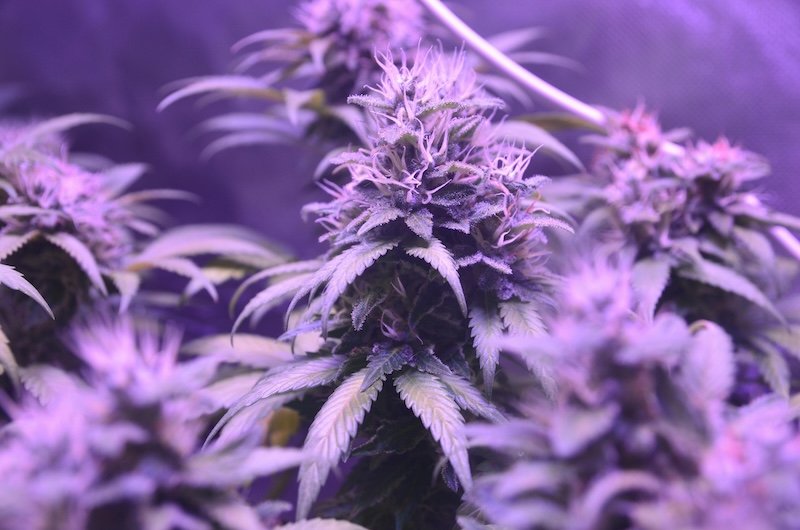
Think of anthocyanins like color molecules that pop up under certain conditions, like cooler temps or high light intensity. When there’s a high concentration of them, the plant starts flaunting those purple hues.
Now, here’s the kicker—not all cannabis strains have what it takes to go purple. It’s all in the genetics. Some strains are born with the ability to produce anthocyanins, while others won’t show a hint of color, no matter what you do.
And don’t fall for the myths—purple buds don’t automatically mean stronger potency or better flavor. It’s mostly about aesthetics, like a sports car with a flashy paint job. Looks great, but it doesn’t change what’s under the hood.
Genetics: Why Some Cannabis Strains Turn Purple
If you want purple buds, you’ve gotta start with the right genetics. You can’t just expect any old strain to turn purple—it’s about choosing ones bred for that violet vibe.
Some of the classics include Granddaddy Purple, Purple Kush, and Purple Punch. These strains are known for their consistent purple hues and are a great starting point for beginners. They’ve got the genes for it—proper purple lineage.
But not all purple strains are the same. Some will go purple no matter what, while others need specific conditions, like cooler temps or particular light cycles. They’re a bit fussier.
So, do your homework. Check strain descriptions, read what other growers say, and don’t be shy about asking experienced growers for tips. And remember, even with the right genetics, you still need the right environment to bring out those purple hues. Genetics are just step one.
Environmental Factors That Influence Purple Cannabis
Temperature:
Now, let’s talk about environment. You’ve got the right genetics, but you need the right conditions to bring out those purple hues. Temperature’s a big one.
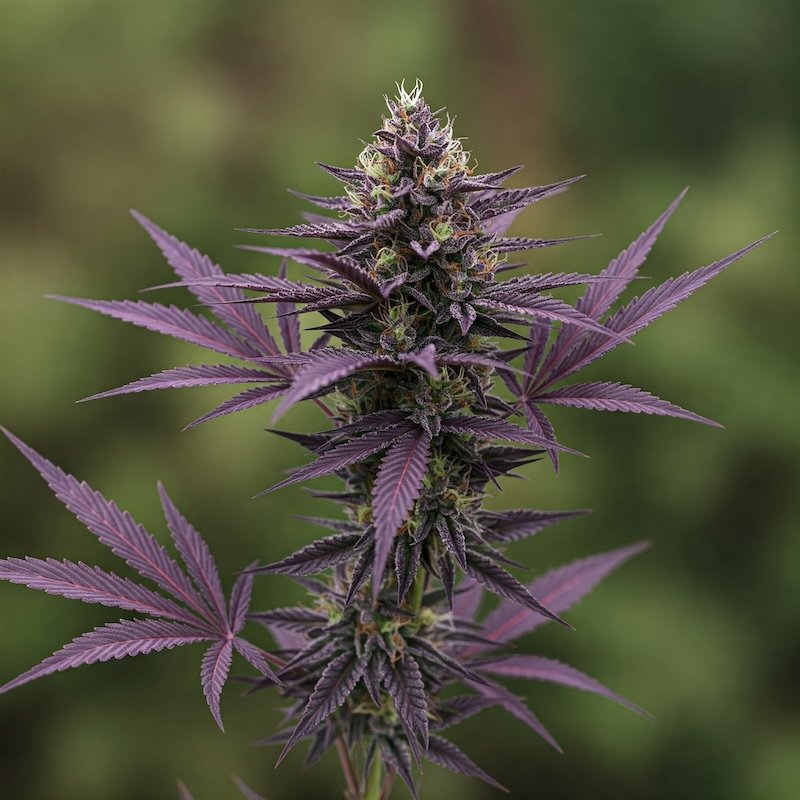
Cooler night temps help enhance purple coloration. It’s the plant’s way of saying, “Alright, time to show off a bit!” Why? Because when the temperature drops, the plant slows down chlorophyll production. Less green pigment means anthocyanins have their time to shine.
Think of it like autumn leaves—same deal. When the temps drop, the green fades, and the vibrant reds, oranges, and purples take over.
For best results, aim for nighttime temperatures around 15-20°C (59-68°F) during flowering. But don’t overdo it—you’re coaxing out color, not giving your plants frostbite. Start lowering temps gradually in the final weeks of flowering for the best effect.
Lighting:
Next up—lighting. It’s not just about how much light your plants get, but what kind.
Certain spectrums, especially UV light, can encourage anthocyanin production. It’s the same UV that gives you a tan. Some growers use supplemental UV-B light in the final weeks of flowering to boost purple hues. It’s like turning up the contrast on a photo—colors get more intense.
But easy does it—too much UV can stress your plants. If you wanna experiment, start with a low-intensity UV-B light, placed 12-18 inches from the canopy, for 15-30 minutes a day in the last couple of weeks of flowering. Think of it like adding spice to a dish—you can always add more, but you can’t take it out.
And don’t forget, overall light intensity matters too. Strong grow lights encourage purple coloration—it’s the plant’s way of flexing its colors. Just don’t overdo it, or you’ll stress your plants. It’s all about balance.
pH:
Now, pH—proper important, this one. It controls what nutrients your plants can actually use. If your pH is off, even a little, your plants might struggle to absorb the good stuff they need to turn purple.
For soil, aim for a slightly acidic range of 6.0-6.5. If you’re running hydro, keep it between 5.5-6.0.
But here’s the thing—it’s not just about hitting the right numbers. You’ve gotta keep it steady. Big pH swings stress your plants, and that can mess with their colors.
So, get yourself a good digital pH meter—those cheap test strips won’t cut it. Check your levels regularly and make small adjustments if needed. Treat it like seasoning your food—add a little at a time until it’s just right.
Once you understand why cannabis turns purple, the next step is learning how to encourage those colours in your own grow. Matty explains the practical side in How to Grow Purple Cannabis: Genetics, Temperature & Grower Tricks.
Final Thoughts
Purple cannabis isn’t magic — it’s plant chemistry. When the right genetics meet the right environmental conditions, anthocyanins step forward and those deep violet tones appear.
But colour alone doesn’t determine quality. Potency, terpene profile, and healthy growth always matter more than appearance.
If you want to learn how growers actually bring out those colours during flowering, continue to Matty’s practical guide: How to Grow Purple Cannabis.